What is your systemactually made of —and who built it?
Structure, governance, headquarters and sites, the programmes that reinforce each other and the ones quietly working against each other. Map the layers before you judge them.


One model, built across four multinationals. The science that explains why it works. Twenty-four leaders around the tables.
Round tables, not rows. A printed workbook, not a slide deck. Two days built around four questions rather than a list of topics — and the people who will argue with you about them.
Most safety systems were never designed. They were accumulated — one programme to solve one problem, another for the next, layer on layer, until nobody in the company can draw the whole thing on one page.
This is two days spent drawing it. Not a conference, not a course: a room of twenty-four senior safety leaders from twenty-four companies, a model built across four multinationals, the research that explains why it holds — and enough time at the table to test both against your own.
Structure, governance, headquarters and sites, the programmes that reinforce each other and the ones quietly working against each other. Map the layers before you judge them.
Triangles, leading and lagging indicators, KPIs that measure activity versus KPIs that measure understanding. What to count, what to stop counting, and what the board actually needs to see.
Centralisation against local reality. Global standards that get interpreted, adapted, sometimes improved. Where ambiguity is healthy — and where, for serious-injury risk, it has to be engineered out.
Visible leadership, trust, participation, the quality of a conversation at the workface — and whether anyone in your organisation measures it, or only counts that it happened.
You will leave with your own system on one page — and a short list of what to change first.
Roughly forty per cent of the two days is discussion at the tables. The rest is input from the faculty and structured feedback between companies.
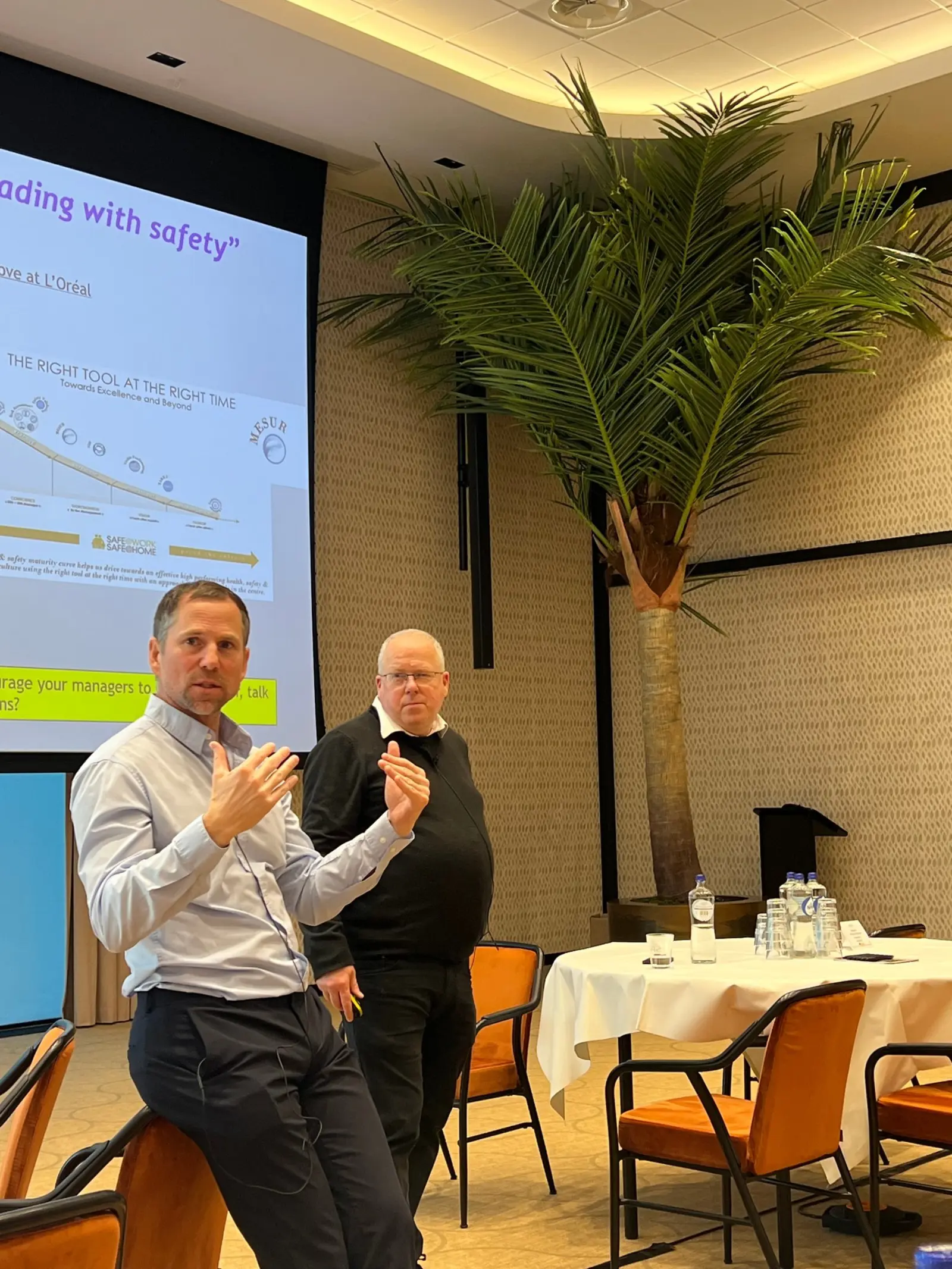
former Global VP EHS, L'Oréal
Thirty-five years running health and safety inside large industrial companies — building, rebuilding and simplifying systems that had to work in dozens of countries at once. The model you will work with over the two days is his own: what he put in place, what he took out, and what he would do differently now.
Research Director, INERIS · safety science, sociology and complex organisations
Twenty years studying how safety ideas were born, how they travelled, and why some of them stopped working when the organisations around them changed. He draws on engineering, human factors, psychology, behavioural science and organisational learning, and is widely published.
In the room he does one thing: connect what Malcolm built to the research that explains why it holds — and where the evidence says it shouldn't.
They have run this room together before. The model is his; the questions are theirs; the answers, by the end of day two, are yours.
Every block runs the same way: input from the faculty, then work at the tables, then feedback between companies. Roughly forty per cent of the two days is you and the people next to you, comparing how it is actually done.
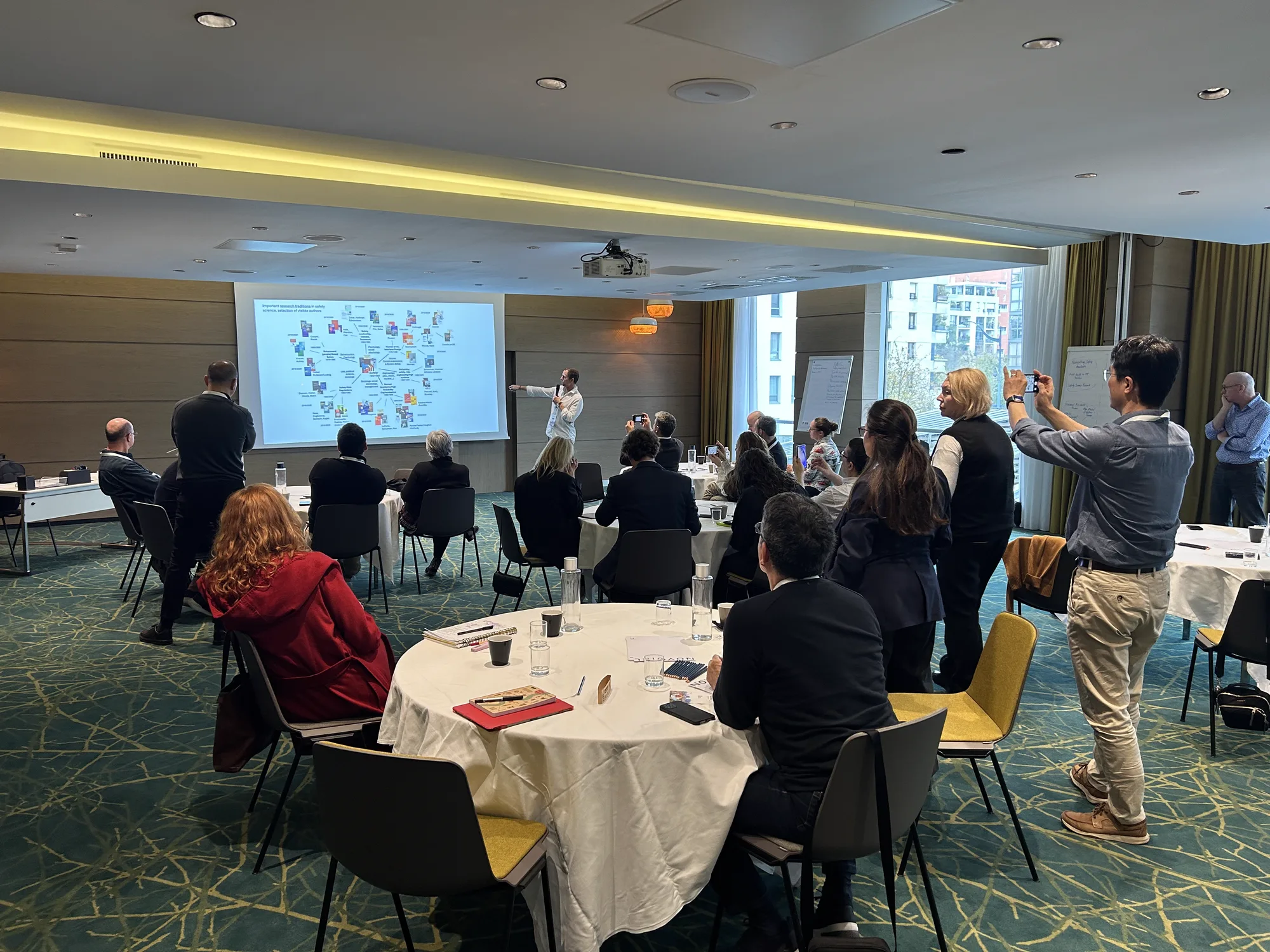
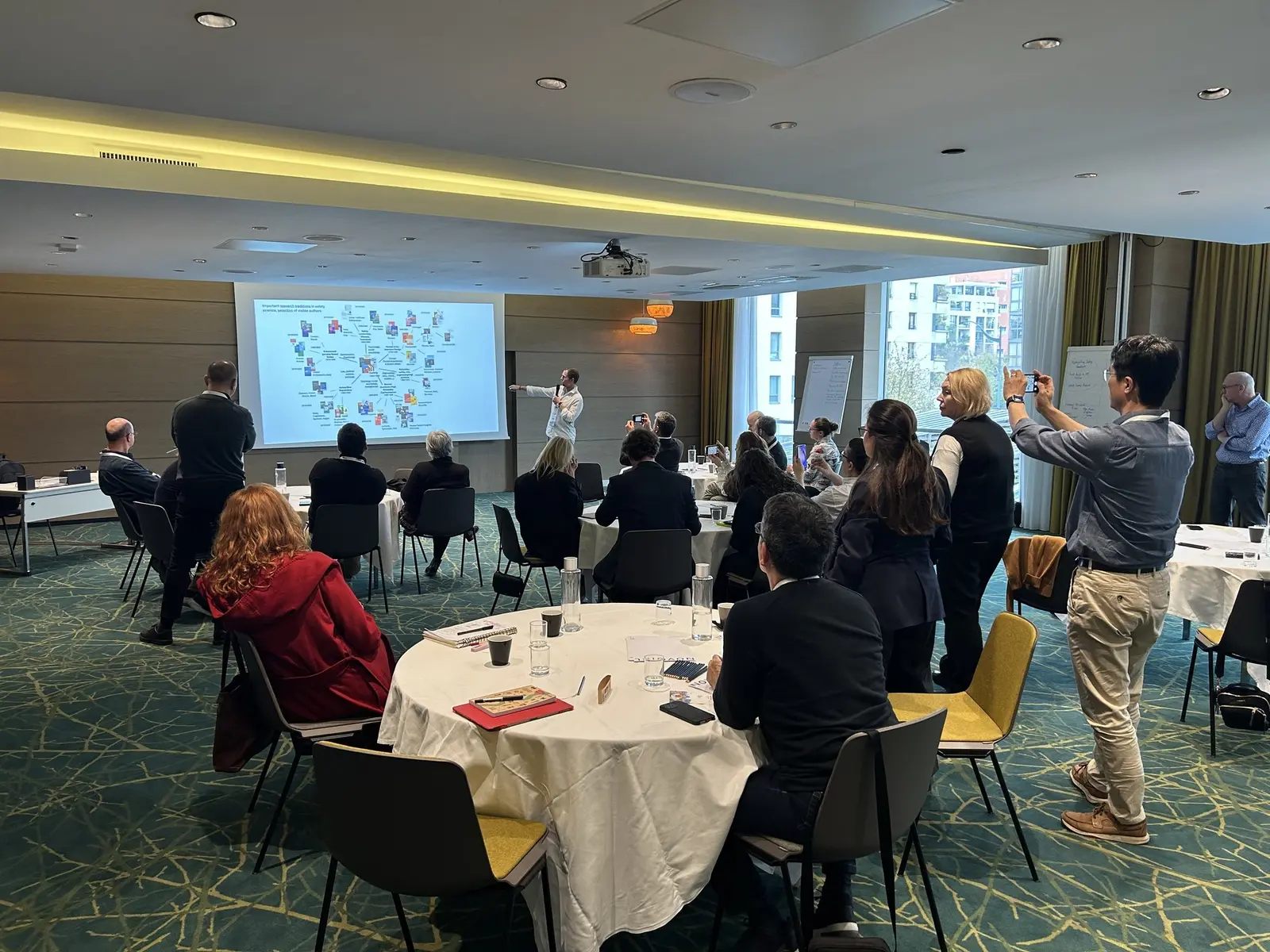
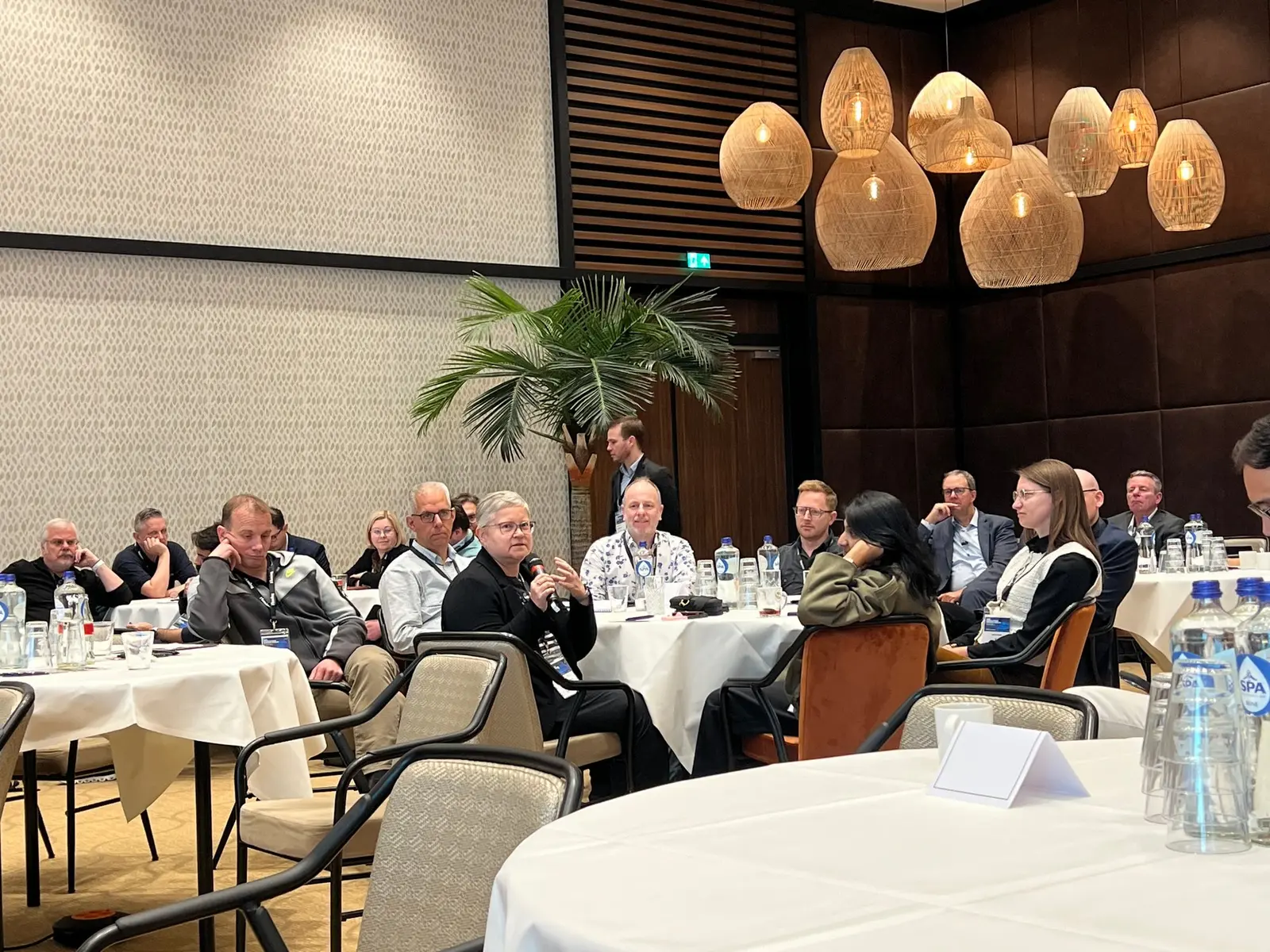
Twenty-four people from twenty-four companies. One seat per organisation, so the conversation at your table is never with a colleague.
Provisional running order. Each block is sixty to ninety minutes on the same rhythm: input, table work, feedback.
The two days are designed to leave you with things you can use on Monday — not a set of slides, but a clearer view of your own system and a short, honest list of what to do about it.
How the three actually connect inside a large organisation — and where they come apart.
What has worked at scale, what has not, and why.
The research behind the practice, in language you can take to a board.
Where the human-factors and organisational-learning traditions agree with each other, and where they don't.
Measurement that supports safety and business performance rather than substituting for understanding.
Freedom within a frame, with the frame actually defined.
Your own shortlist, written in the room, in your own words.
Your system, mapped on one page over the two days. It goes home with you; nothing lives in a slide deck.
One page that shows what you actually have — and what to change first.
Two full days, and both evenings. The venue is in the centre of the city and is announced to registered delegates.
 Monday evening
Arrive the evening before. Meet the other twenty-three, and the faculty, before anyone has a name badge on. Included in the seat.
 Tuesday evening
After day one, dinner with Malcolm and Jean-Christophe and the whole room. The conversations that don't fit in a session happen here. Included in the seat.
Announced to registered delegates. Not an airport hotel.
Breakfast, lunch and refreshments on both days. Reception, dinner, the workbook, and the delegate list.
Book your own; the venue is easy to reach from anywhere central.
23–24 March 2027. Reception on the 22nd. Day two ends at 16:00 for evening trains and flights.
One seat per company. The first ten go at the early price from 1 October; the standard price applies from 1 December; a final release only happens in March if anything is left.
All prices exclude VAT. Every seat includes both full days, the reception on the 22nd, dinner on the 23rd, breakfast, lunch and refreshments on both days, the printed workbook and the delegate list. Accommodation is not included.
Invoice and wire transfer available. Organised by IFS Group Kft., the merchant of record for the workshop.
Twenty-four companies. One conversation you can't have at your own head office.
Early seats from 1 October at €850 ex VAT, limited to ten. If you want one of those, say so now — the queue is in order of arrival.